
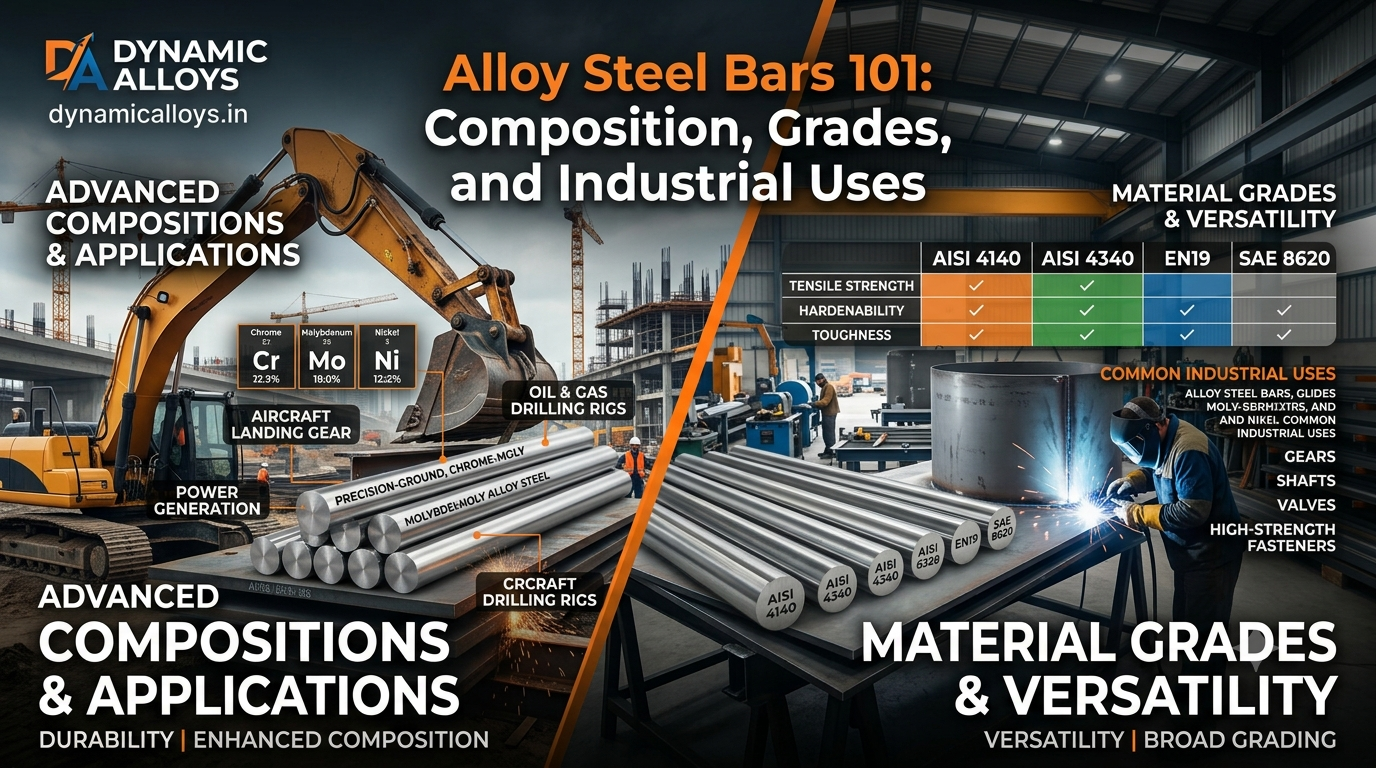
From heavy machinery to automotive drivetrains, alloy steel bars quietly hold modern industry together. If you are sourcing alloy steel bars India manufacturers trust, understanding what goes into them, and which grade suits your job, saves money and prevents failures. At Dynamic Alloys, we have put together this quick guide.
What Are Alloy Steel Bars?
Alloy steel bars are made from steel that contains deliberate additions of elements beyond carbon and iron. These additions improve strength, hardness, toughness, wear resistance, and performance under heat or stress. Compared with plain carbon steel, alloy steel offers better mechanical properties and can be heat treated for demanding applications.
Composition: What Makes Alloy Steel Different
The base is iron with carbon, typically 0.2% to 0.6% for most bars. The alloying elements then shape performance:
- Chromium: improves hardness, corrosion resistance, and wear resistance.
- Nickel: boosts toughness and impact strength, even at low temperatures.
- Molybdenum: increases strength at high temperatures and reduces brittleness.
- Manganese: enhances hardenability and tensile strength.
- Vanadium: refines grain structure for added strength and fatigue resistance.
Total alloy content is generally under 5% for low-alloy steels, and higher for high-alloy varieties.
Popular Grades of Alloy Steel Bars
Choosing the right grade depends on load, environment, and machining needs. Commonly used grades include:
- EN8 / 1045: a medium carbon steel, widely used for general-purpose shafts and axles.
- EN19 / 4140: chromium-molybdenum steel with high strength and good fatigue resistance, ideal for gears, shafts, and bolts.
- EN24 / 4340: nickel-chromium-molybdenum steel known for exceptional toughness and strength.
- EN31: a high-carbon chromium steel with excellent hardness for bearings and tools.
- 8620: a case-hardening grade suited to gears and camshafts needing a tough core and hard surface.
Always confirm the grade against the relevant standard (such as IS, EN, or AISI/SAE) and request a mill test certificate.
Industrial Uses of Alloy Steel Bars
The versatility of alloy steel bars makes them essential across sectors:
- Automotive: crankshafts, connecting rods, gears, and axles.
- Oil and gas: drilling components, valves, and pump shafts.
- Construction and mining: heavy-duty fasteners, hydraulic parts, and wear components.
- Power generation: turbine shafts and high-temperature fittings.
- General engineering: tooling, dies, spindles, and machine parts.
How to Choose the Right Supplier in India
When buying alloy steel bars in India, look beyond price. Check for consistent chemical composition, accurate dimensions, proper heat treatment, traceability, and testing documentation. A reliable supplier also offers a range of sizes, finishes, and timely delivery.
Source Alloy Steel Bars from Dynamic Alloys
Dynamic Alloys supplies quality alloy steel bars across India, backed by certified material and responsive support. Whether you need EN8, EN24, 4140, or a custom grade, our team helps you match the right bar to your application.
Contact Dynamic Alloys today for a quote on alloy steel bars in India.